
Einbürgerungstest Practice
German citizenship test practice — 460 questions, free, no signup required.
Progress is session-only — sign up free to save it.
Im Jahr 1953 gab es in der DDR einen Aufstand, an den lange Zeit in der Bundesrepublik Deutschland ein Feiertag erinnerte. Wann war das?
In 1953, there was an uprising in the GDR that a holiday in the Federal Republic of Germany commemorated for a long time. When was that?
- A. 9 November
- B. 20 July
- C. 17 June
- D. 1 May
Viele Menschen in Deutschland arbeiten in ihrer Freizeit ehrenamtlich. Was bedeutet das?
Many people in Germany do volunteer work in their free time. What does that mean?
- A. They work in the federal government.
- B. They work in a hospital and earn money doing so.
- C. They work voluntarily and without pay in clubs and associations.
- D. They work as soldiers.
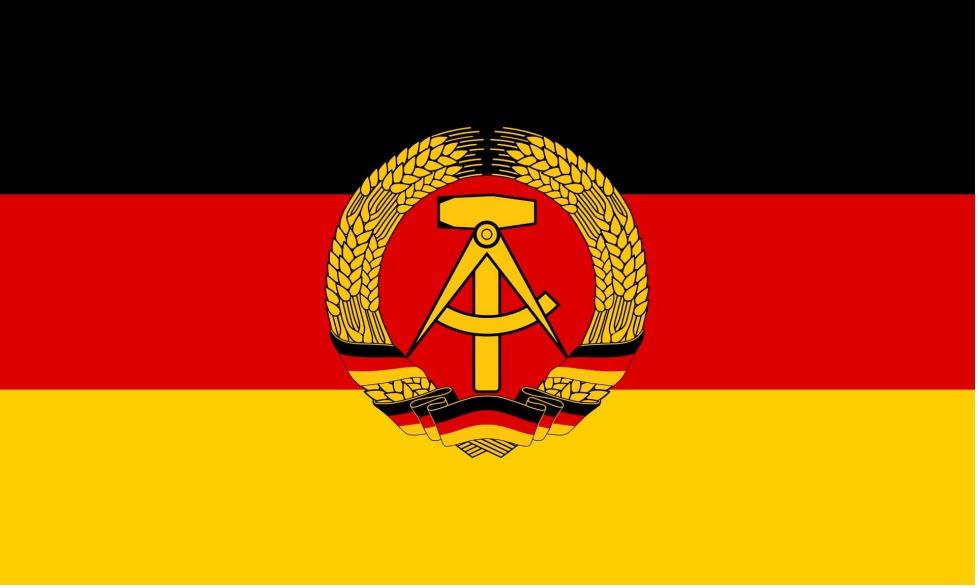
Welcher deutsche Staat hatte eine schwarz-rot-goldene Flagge mit Hammer, Zirkel und Ährenkranz?
Which German state had a black-red-gold flag with a hammer, compass, and wreath of grain?
- A. GDR
- B. Third Reich
- C. Prussia
- D. Federal Republic of Germany
Das Europäische Parlament wird regelmäßig gewählt, nämlich alle …
The European Parliament is elected regularly, namely every …
- A. 5 years
- B. 6 years
- C. 7 years
- D. 8 years
In Deutschland dürfen Menschen offen etwas gegen die Regierung sagen, weil?
In Germany, people are allowed to openly say something against the government because?
- A. freedom of expression applies here.
- B. people have the right to vote.
- C. freedom of religion applies here.
- D. people pay taxes.
In Deutschland …
In Germany, …
- A. one can have several spouses at the same time.
- B. one is allowed to be married to only one partner at a time.
- C. a woman is not allowed to remarry once her husband has died.
- D. one is not allowed to remarry once one has been married.
In welchem Jahr wurde die Mauer in Berlin gebaut?
In which year was the Wall in Berlin built?
- A. 1961
- B. 1959
- C. 1956
- D. 1953
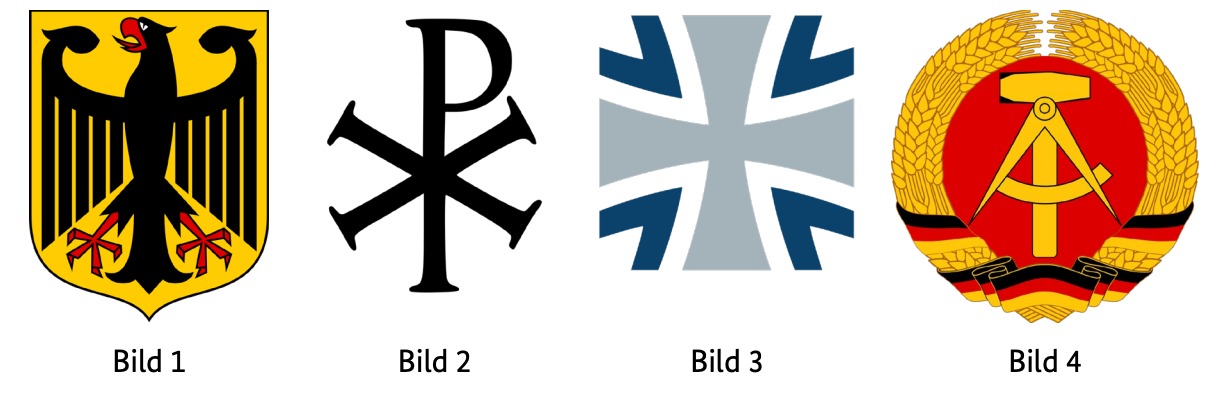
Welches ist das Wappen der Bundesrepublik Deutschland?
Which is the coat of arms of the Federal Republic of Germany?
- A. 1
- B. 2
- C. 3
- D. 4
Wen vertreten die Gewerkschaften in Deutschland?
Who do trade unions represent in Germany?
- A. small businesses
- B. employees
- C. large businesses
- D. self-employed people
Wie heißt das jüdische Gebetshaus?
What is the name of the Jewish house of prayer?
- A. Basilica
- B. Mosque
- C. Synagogue
- D. Church
In Deutschland dürfen Ehepaare sich scheiden lassen. Meistens müssen sie dazu das "Trennungsjahr" einhalten. Was bedeutet das?
In Germany, married couples are allowed to divorce. Usually they must observe the "year of separation" for this. What does that mean?
- A. The spouses are married for one year, then the divorce is possible.
- B. The divorce process takes one year.
- C. The spouses lead separate lives for at least one year. After that, the divorce is possible.
- D. The right to visit the children applies for one year.
Wann baute die DDR die Mauer in Berlin?
When did the GDR build the Wall in Berlin?
- A. 1990
- B. 1961
- C. 1933
- D. 1919
Was bedeutet der Begriff "europäische Integration"?
What does the term "European integration" mean?
- A. The term refers to the union of European states to form the EU
- B. This refers to American immigrants in Europe
- C. This refers to European emigrants in the USA
- D. The term means a stop to immigration to Europe
Wahlen in Deutschland sind frei. Was bedeutet das?
Elections in Germany are free. What does that mean?
- A. All eligible voters must vote.
- B. One may accept money for voting for a particular candidate.
- C. The voter may neither be influenced nor forced into a particular vote and must not suffer any disadvantages because of the vote.
- D. Only people who have never been in prison are allowed to vote.
Was für eine Staatsform hat Deutschland?
What form of state does Germany have?
- A. Monarchy
- B. Principality
- C. Republic
- D. Dictatorship
Sie gehen in Deutschland zum Arbeitsgericht bei …
In Germany, you go to the labor court in the case of …
- A. unjustified dismissal by your boss.
- B. difficulties after a traffic accident.
- C. an incorrect utility bill.
- D. problems with neighbors.
In Deutschland können Eltern bis zum 14. Lebensjahr ihres Kindes entscheiden, ob es in der Schule am?
In Germany, until their child turns 14, parents may decide whether the child participates in …?
- A. religious education
- B. political education classes.
- C. history classes.
- D. language classes.
Wer wird bei der Europawahl gewählt?
Who is elected in the European election?
- A. the European constitution
- B. the members of the European Parliament
- C. the European Commission
- D. the countries that are allowed to join the EU
Was bedeutet die Abkürzung DDR?
What does the abbreviation GDR stand for?
- A. German Democratic Republic
- B. Third German Republic
- C. Third German Broadcasting
- D. The German Republic
Bei Erziehungsproblemen können Eltern in Deutschland Hilfe erhalten vom …
In the case of parenting problems, parents in Germany can get help from the …
- A. Public Order Office.
- B. Youth Welfare Office.
- C. School Board.
- D. Health Department.
Naturalization also requires B1 German. Our free B1 course gets you there.