
B1 German course. Pass the Goethe exam. Actually understand German.
Twelve units mapped to the B1 Goethe format. Real grammar. Real exercises. Real preparation, for citizenship, university, or work in Germany.
The B1 course, unit by unit
12 units · follows the Hueber Motive grammar progression

Wer war ...?
Role models, biographies, turning points in a life.
Grammar: Plusquamperfekt, temporal clauses with nachdem and als.

Was wäre, wenn ...?
Photos, memories, what-if scenarios.
Grammar: Konjunktiv II (würde plus Vergangenheit), irreale Bedingungen.
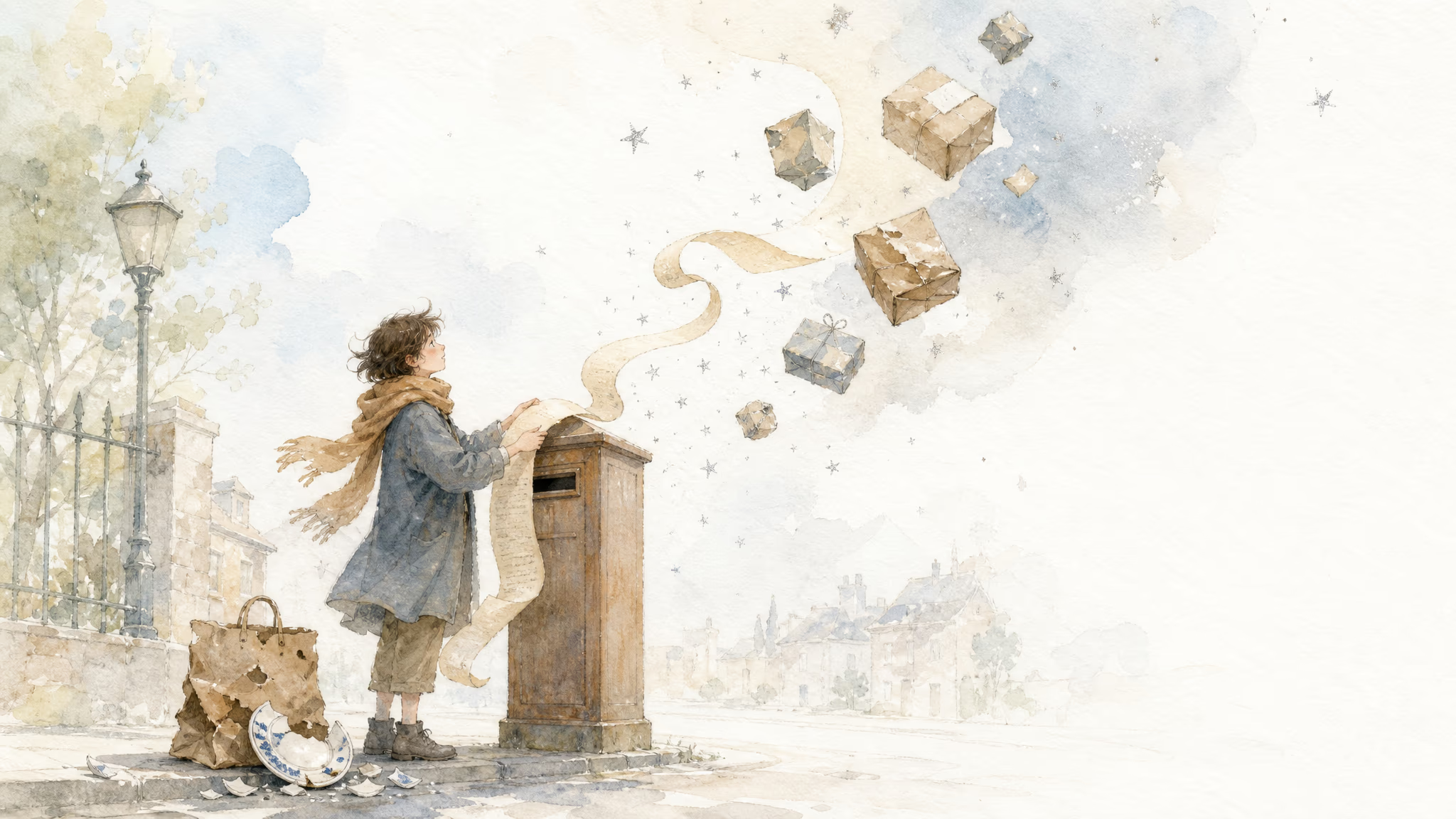
Wozu brauchst du das?
Shopping, consumption, complaints, advertising.
Grammar: Finale Nebensätze with damit and um zu.

Was könnte das sein?
Truth and lies, food facts, statistics.
Grammar: Subjective modal verbs, expressing guesses and hypotheses.

Wohin geht die Reise?
Travel, emigration, couchsurfing, wanderlust.
Grammar: Futur I and II, forecasts and plans.

Ist er wirklich schon so alt?
Relationships, nostalgia, politeness in German.
Grammar: Nominalisation, adjective groups, complex noun phrases.
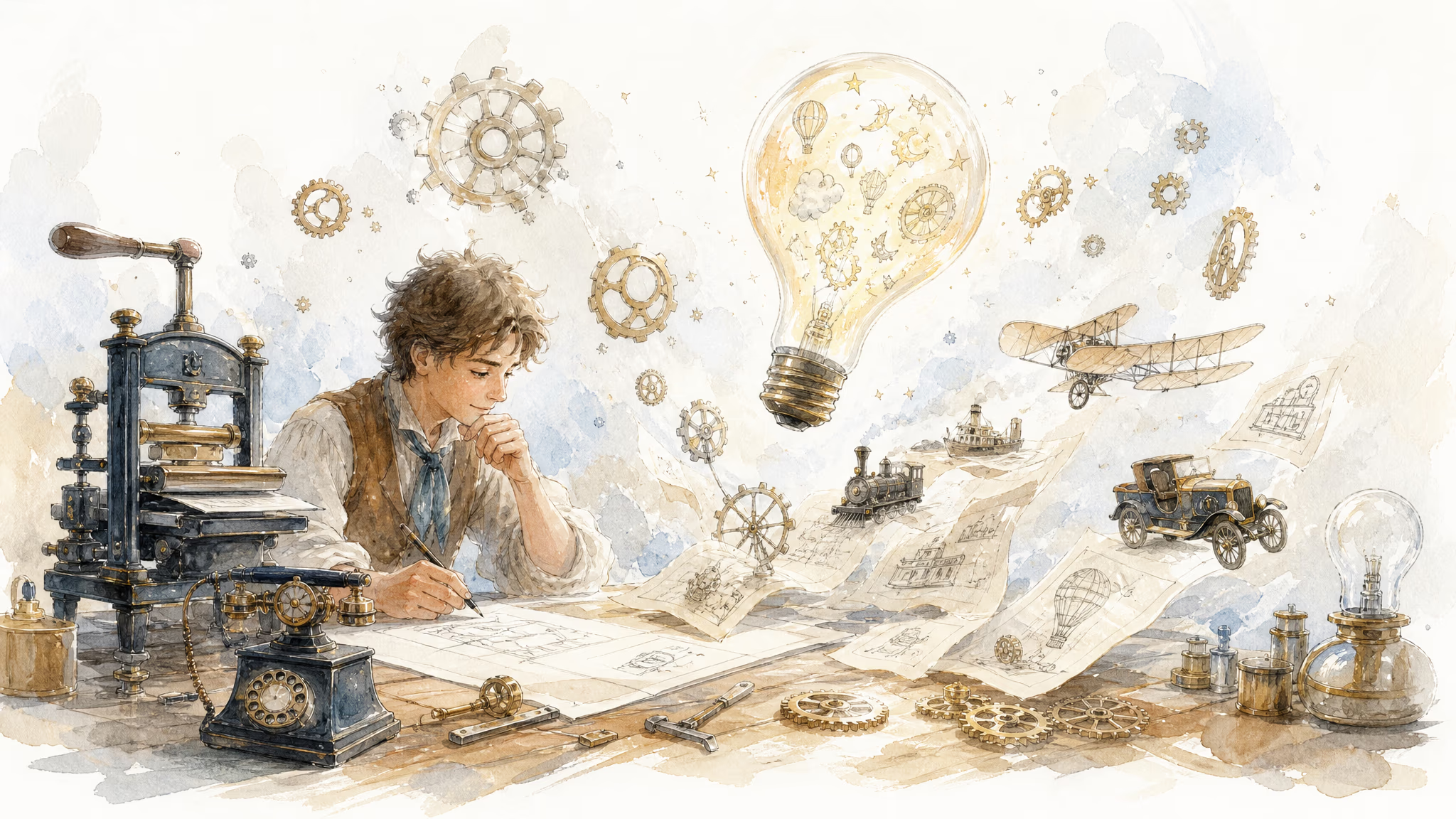
Von wem wurde ... erfunden?
Technology, inventions, multiple intelligences.
Grammar: Vorgangspassiv in all tenses, Zustandspassiv.
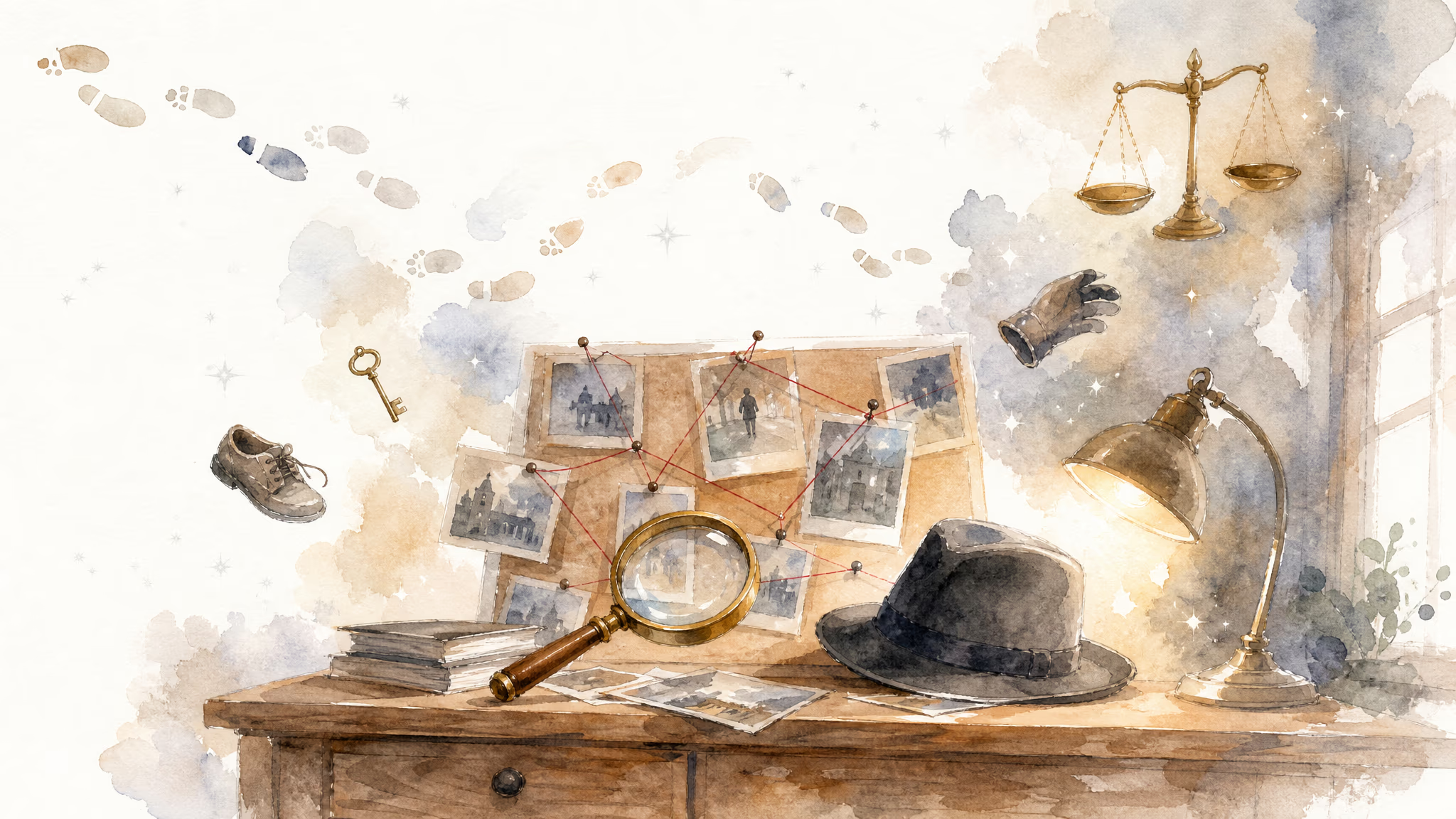
Wer war der Täter?
Crime stories, news reports, reported speech.
Grammar: Indirect speech, Konjunktiv I, reporting what someone said.
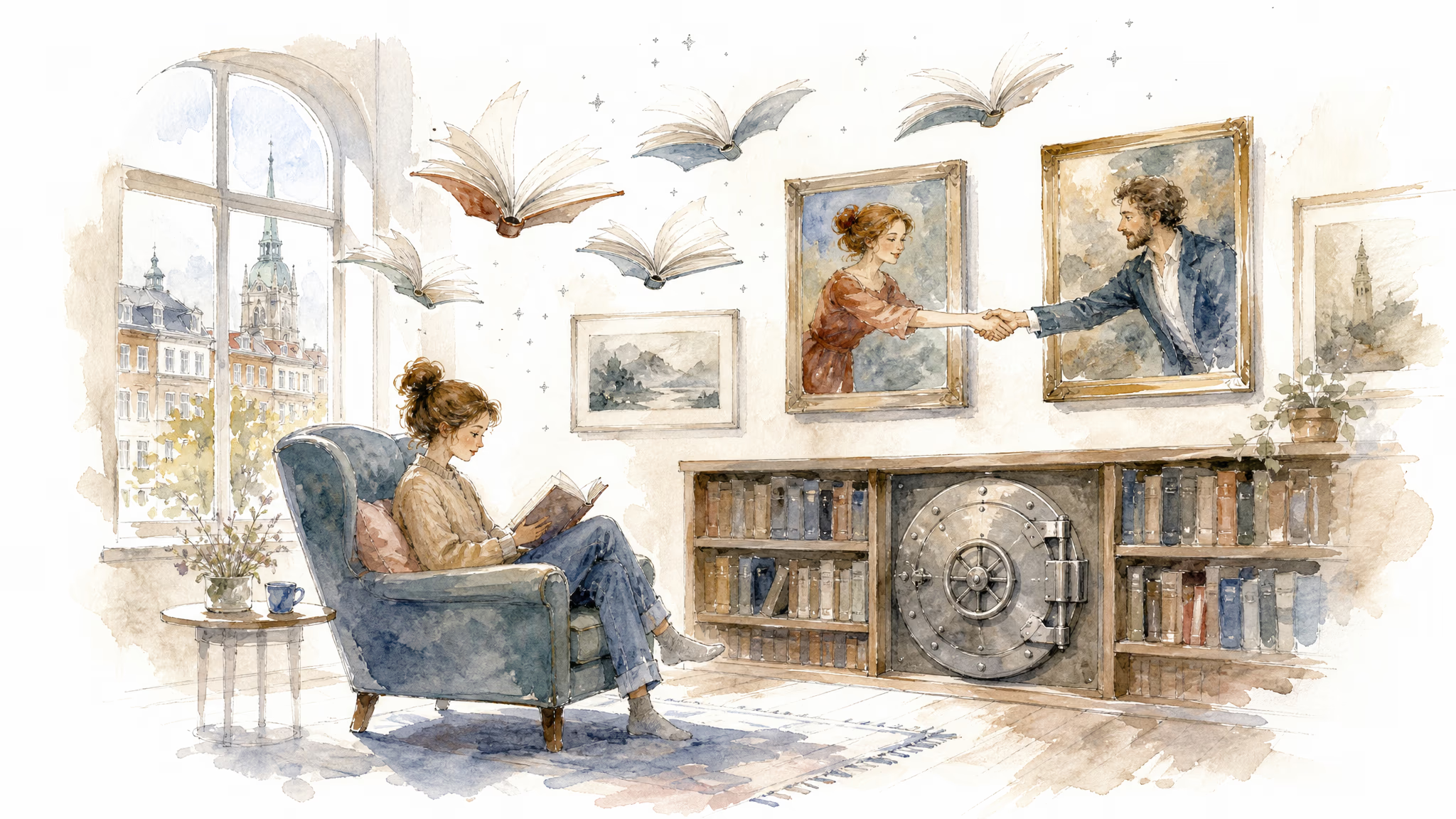
Was liest du da?
Art, culture, banking, reading for meaning.
Grammar: Partizipialkonstruktionen, extended attributes.
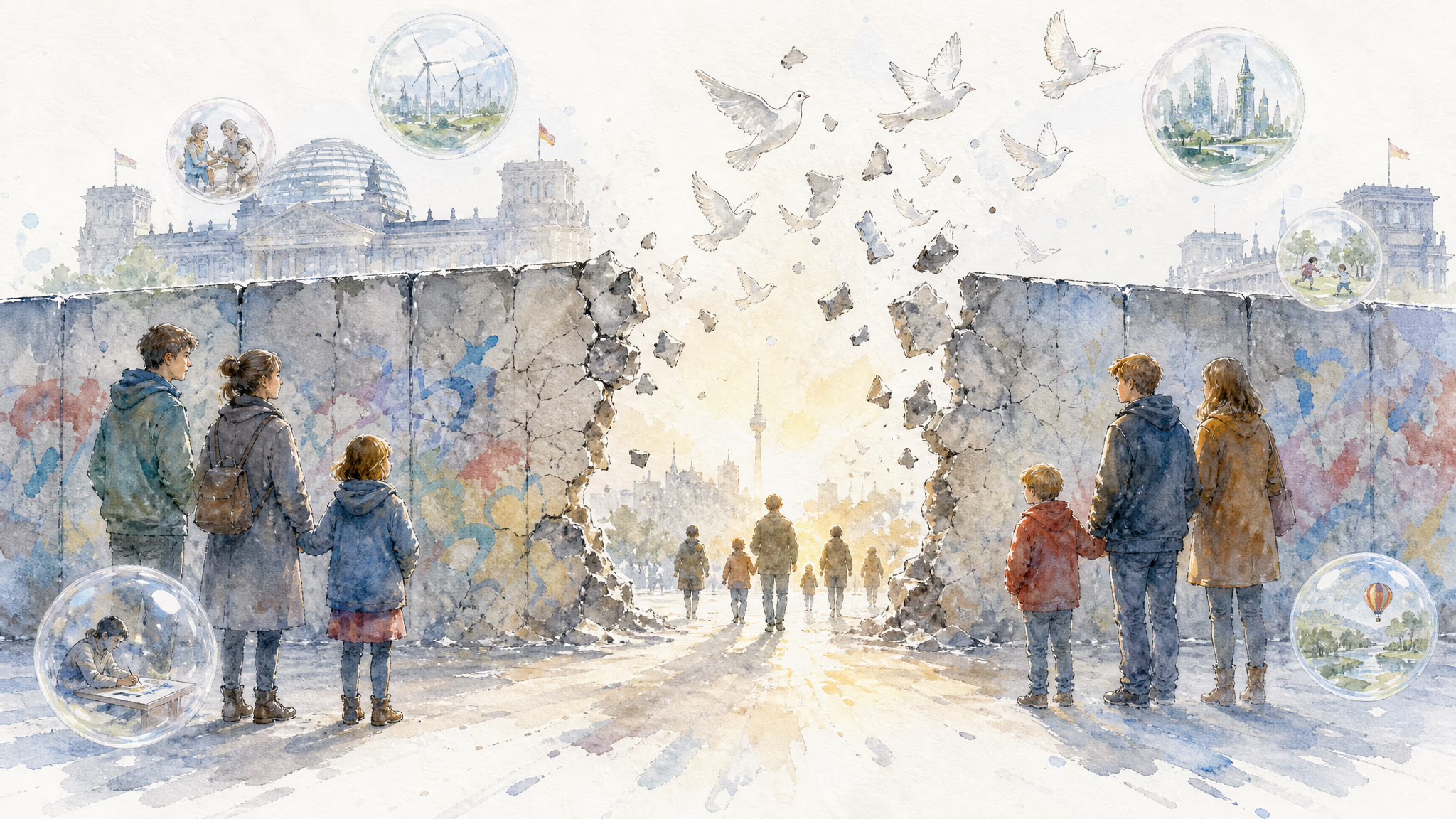
Hättest du anders gehandelt?
Berlin Wall, democracy, civic life.
Grammar: Past Konjunktiv II, looking back on decisions.

Wie wird die Zukunft werden?
The future, resolutions, mobility.
Grammar: Future tenses, connectors for complex arguments.
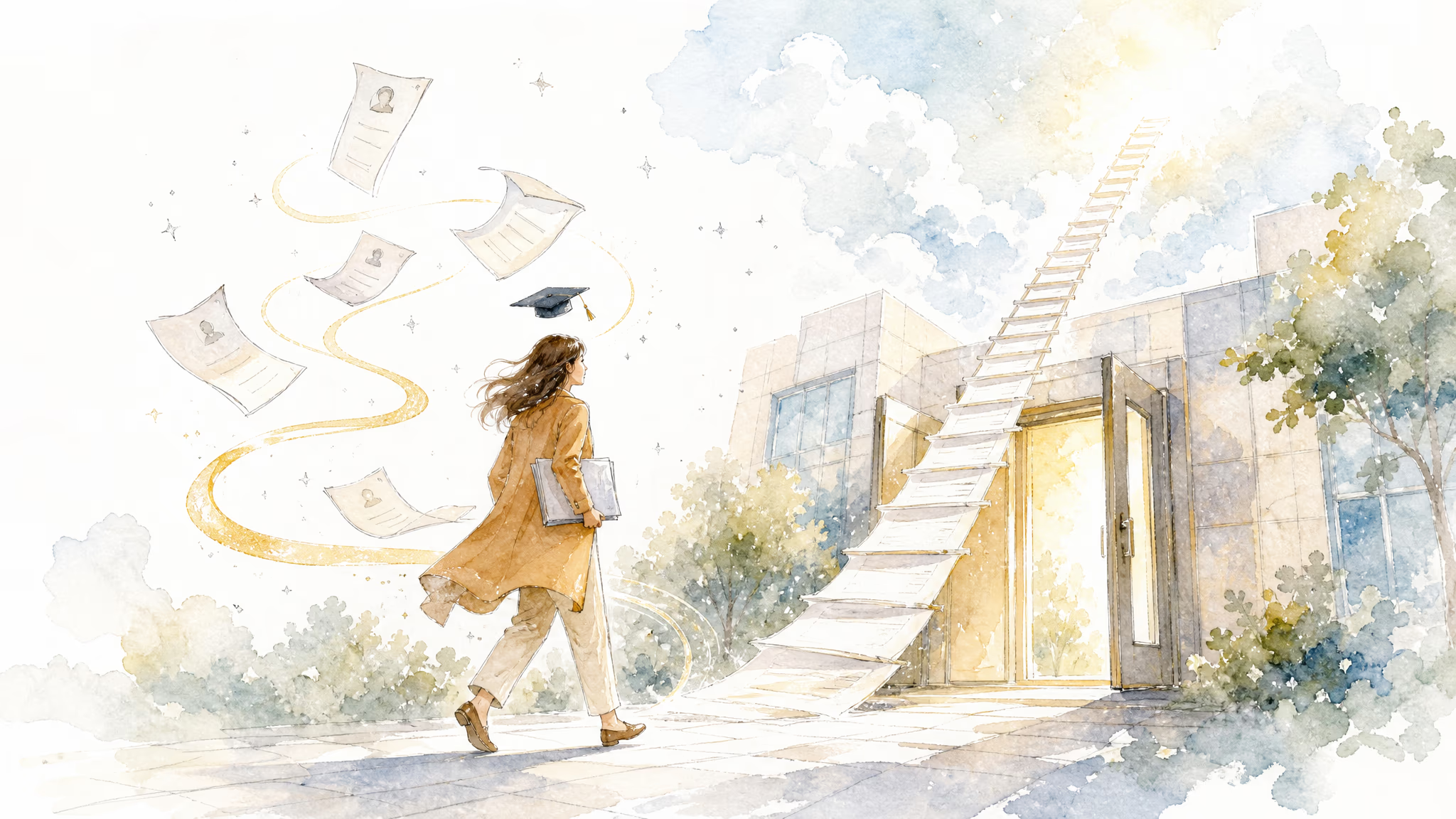
Wie hast du das geschafft?
Success, applications, job hunting, exam day.
Grammar: Full Goethe B1 exam prep: Lesen, Hören, Schreiben, Sprechen.
Why B1 is where most learners stall
Many consumer apps thin out before B1, and self-study stalls without structure. We built B1 for the person who has an exam date and needs to be ready for it.
One Who Learns
Good atA1 to B1 grammar spine. Theory before drills. Vocab that reviews itself.
What you getA1 free, then €12 a month for A2 and B1. Self-paced. Built for the Goethe exam.
Textbooks
Good atReal grammar progression, tested in classrooms.
What is missingNo audio. No feedback between sessions. You do it once and forget it by Thursday.
Language apps
Good atDaily habit, clean UI, good for vocab.
What is missingPattern matching, not grammar. You finish a tree and still cannot say why the article changed.
Private schools
Good atStructure and accountability in a group setting.
What is missingEUR 400 to 1,500 a course. Fixed schedule. Pace set by the slowest student, not by you.
The real problem was never a missing feature. It was four products that never talk to each other. One Who Learns closes the gap.
One place to learn. Everything connected.
One Who Learns replaces your textbook, your apps, and your flashcard grind, and works alongside your tutor.
Memory palace flashcards
Learn vocabulary through image-based association — not rote repetition. Each word is paired with a visual scene that anchors meaning in memory. Combined with spaced repetition: forget a word, it comes back more often.

/hʊnt/
Tap to see details
dog
Examples
Wir haben einen kleinen Hund.
We have a small dog.
Der Hund spielt gerne im Garten.
The dog likes to play in the garden.

/ˈkat͡sə/
cat
Examples
Meine Katze schläft viel.
My cat sleeps a lot.
Die Katze spielt mit dem Ball.
The cat plays with the ball.

/ˈap͡fl̩/
apple
Examples
Ich esse jeden Tag einen Apfel.
I eat an apple every day.
Der rote Apfel ist sehr süß und knackig.
The red apple is very sweet and crisp.

/ˈbluːmə/
flower
Examples
Ich kaufe eine schöne Blume.
I buy a beautiful flower.
Die Blume ist sehr rot.
The flower is very red.

/buːx/
book
Examples
Ich lese ein Buch.
I am reading a book.
Dieses Buch ist sehr interessant.
This book is very interesting.

/ˈvasɐ/
water
Examples
Ich trinke gern kaltes Wasser im Sommer.
I like to drink cold water in summer.
Ist das Wasser in der Flasche frisch?
Is the water in the bottle fresh?

/ʃvaʁt͡s/
black
Comparative Forms
Examples
Ihr neues Fahrrad ist schwarz und modern.
Her new bicycle is black and modern.
Ich trinke gerne schwarzen Kaffee am Morgen.
I like to drink black coffee in the morning.

/ˈapˌʃlʊs/
graduation, qualification, degree
Examples
Er feierte letzte Woche seinen Abschluss.
He celebrated his graduation last week.
Sie möchte einen guten Abschluss machen.
She wants to get a good qualification.

/ˈaːbn̩tɔɪ̯ɐ/
adventure
Examples
Ich suche immer das nächste Abenteuer.
I am always looking for the next adventure.
Das war ein echtes Abenteuer für uns alle.
That was a real adventure for all of us.

/ˈaʊ̯sˌʃtɛlʊŋ/
exhibition
Examples
Wir besuchten eine interessante Kunstausstellung.
We visited an interesting art exhibition.
Die Ausstellung ist noch bis nächste Woche geöffnet.
The exhibition is still open until next week.

/ˈaʊ̯toˌbaːn/
motorway, highway
Examples
Wir fahren auf der Autobahn nach Berlin.
We are driving on the motorway to Berlin.
Auf der Autobahn gibt es oft Stau.
There is often traffic jam on the motorway.

/ˈd͡ʒʊŋl̩/
jungle
Examples
Im Dschungel leben viele exotische Tiere und Pflanzen.
Many exotic animals and plants live in the jungle.
Sie träumt davon, einmal den Amazonas-Dschungel zu besuchen.
She dreams of visiting the Amazon jungle someday.

/detɛkˈtiːf/
detective
Examples
Der Detektiv löste den Fall nach langer Ermittlung.
The detective solved the case after a long investigation.
Sie liest gerne Bücher über einen klugen Detektiv.
She likes to read books about a clever detective.

/ˈdiːpˌʃtaːl/
theft
Examples
Der Diebstahl wurde sofort der Polizei gemeldet.
The theft was immediately reported to the police.
Leider nimmt die Zahl der Diebstähle in der Stadt zu.
Unfortunately, the number of thefts in the city is increasing.

/ˈbaːɐ̯ˌɡɛlt/
cash
Examples
Ich habe leider kein Bargeld dabei.
Unfortunately, I don't have any cash with me.
Man kann hier nur mit Bargeld zahlen.
You can only pay with cash here.

/demokʁaˈtiː/
democracy
Examples
Wir leben in einer stabilen Demokratie.
We live in a stable democracy.
Die Demokratie schützt die Rechte der Bürger.
Democracy protects the rights of citizens.

/ˈbuːxˌhandlʊŋ/
bookshop
Examples
Ich kaufe meine Bücher immer in der örtlichen Buchhandlung.
I always buy my books at the local bookshop.
Die neue Buchhandlung hat eine große Auswahl.
The new bookshop has a large selection.

/bəˈvaɪ̯s/
evidence / proof
Examples
Die Polizei sucht nach dem Beweis seiner Schuld.
The police are looking for the proof of his guilt.
Gibt es einen klaren Beweis für diese Behauptung?
Is there clear evidence for this claim?

/ˈaʊ̯sˌvɪʁkʊŋ/
effect / impact
Examples
Klimawandel hat ernste Auswirkungen auf die Umwelt.
Climate change has serious effects on the environment.
Die langfristigen Auswirkungen sind noch unbekannt.
The long-term effects are still unknown.

/ˈdʁʊkɐ/
printer
Examples
Mein Drucker funktioniert nicht, ich brauche einen neuen.
My printer is not working, I need a new one.
Kannst du bitte das Dokument am Drucker abholen?
Can you please pick up the document from the printer?

Grammar drills for the Goethe exam
Plusquamperfekt, Konjunktiv II der Vergangenheit, Vorgangspassiv, indirekte Rede. Every B1 structure gets its own drill. Mistakes are tracked, so you see exactly where you lose points before the exam.

Exercises mapped to the exam
Every exercise type maps to a Goethe B1 module you prepare on your own — Lesen, Hören, and Schreiben — with Sprechen practiced live alongside the course. The final unit is a full exam strategy pack with timed runs, model answers, and common traps.

B1 vocab list, already built
320 B1 words with full irregular verb conjugations, gender colour coding, audio, and spaced repetition. Visual flashcards turn abstract vocabulary into memory.

Interactive reference tables
Every irregular verb, every Konjunktiv form, every relative pronoun. One tap away during an exercise. One tap away the week before the exam.

Connect your AI assistant via MCP
Connect Claude or ChatGPT to your account through the Model Context Protocol. Your AI grades writing, explains grammar in context, and adapts to where you are in the course.
Start learning German. For real this time.
A1 is free. 8 units. Full features. No credit card.
Common questions
Duolingo is built around pattern matching rather than explaining why German grammar works the way it does. One Who Learns is a structured curriculum. 30 units with theory blocks, grammar drills, and exam-style exercises. Your vocab reviews itself through spaced repetition. You do not need a separate flashcard app.
Yes. Exercise formats mirror the Goethe exam modules you prepare on your own — reading (Lesen), listening (Hören), and writing (Schreiben) — plus the grammar and vocabulary that underpin all four. Progress is tracked by grammar point, so you always know what to work on next. At B1, the final unit is a full exam-strategy module covering Lesen, Hören, Schreiben, and Sprechen.
Your tutor gives you 1 to 2 hours a week. What about the other 5 to 10 hours of study? That is where One Who Learns lives. The tutor focuses on speaking and correction. The platform handles grammar, retention, and structure between sessions. They complement each other.
A1 is free forever. A2 and B1 unlock with Premium at €12/month or €99/year, less than a single private tutor session.
Yes, with Speaking with AI. You talk or type in German and get answers at your level, with your mistakes corrected, including practice for the Goethe B1 presentation. It's part of Premium and of the 14-day trial with a card. For real conversation with a person, pair the app with a tutor or a tandem partner.
A1 is free forever. Sections take 10 to 15 minutes each, built for real schedules, not idealised ones. Vocab reviews automatically, so even sporadic sessions still build retention.
The curriculum follows the grammar progression of Hueber Motive, a textbook used in German universities and Sprachschulen. Exercise types map to the Goethe B1 exam format. We built this to pass the exam, not to gamify learning.