
Einbürgerungstest Practice
German citizenship test practice — 460 questions, free, no signup required.
Progress is session-only — sign up free to save it.
In welcher Besatzungszone wurde die DDR gegründet? In der …
In which occupation zone was the GDR founded? In the …
- A. Soviet occupation zone
- B. French occupation zone
- C. American occupation zone
- D. British occupation zone
Die Erziehung der Kinder ist in Deutschland vor allem Aufgabe …
In Germany, raising children is primarily the responsibility of …
- A. the parents
- B. the schools
- C. the grandparents
- D. the state
Wann wurde die DDR gegründet?
When was the GDR founded?
- A. 1947
- B. 1949
- C. 1953
- D. 1956
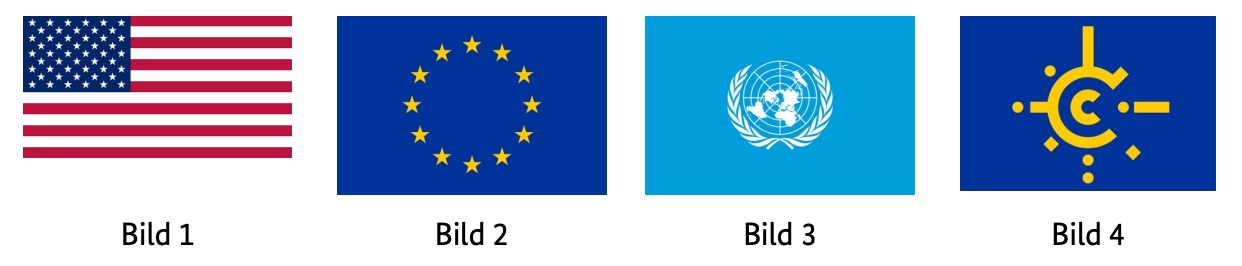
Welche ist die Flagge der Europäischen Union?
Which is the flag of the European Union?
- A. Image 1
- B. Image 2
- C. Image 3
- D. Image 4
Wie viele Besatzungszonen gab es in Deutschland nach dem Zweiten Weltkrieg?
How many occupation zones were there in Germany after the Second World War?
- A. 3
- B. 4
- C. 5
- D. 6
Welche deutsche Stadt wurde nach dem Zweiten Weltkrieg in vier Sektoren aufgeteilt?
Which German city was divided into four sectors after the Second World War?
- A. Dresden
- B. Munich
- C. Frankfurt an der Oder
- D. Berlin
Womit kann man in der Bundesrepublik Deutschland geehrt werden, wenn man auf politischem, wirtschaftlichem, kulturellem, geistigem oder sozialem Gebiet eine besondere Leistung erbracht hat? Mit dem …
With what can a person be honored in the Federal Republic of Germany for a special achievement in the political, economic, cultural, intellectual, or social field? With the …
- A. the Federal Eagle
- B. the honorary title "Hero of the German Democratic Republic"
- C. the Federal Cross of Merit
- D. the Patriotic Order of Merit
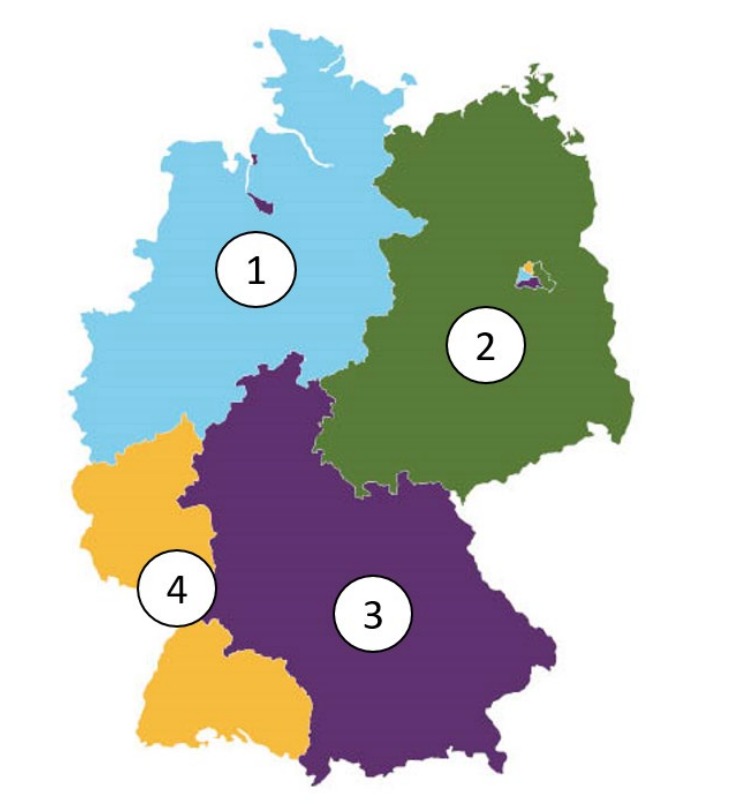
Wie waren die Besatzungszonen Deutschlands nach 1945 verteilt?
How were the occupation zones of Germany distributed after 1945?
- A. 1 = Great Britain, 2 = Soviet Union, 3 = USA, 4 = France
- B. 1 = Great Britain, 2 = USA, 3 = Soviet Union, 4 = France
- C. 1 = Soviet Union, 2 = Great Britain, 3 = USA, 4 = France
- D. 1 = Great Britain, 2 = Soviet Union, 3 = France, 4 = USA
Vom Juni 1948 bis zum Mai 1949 wurden die Bürgerinnen und Bürger von West-Berlin durch eine Luftbrücke versorgt. Welcher Umstand war dafür verantwortlich?
From June 1948 to May 1949, the citizens of West Berlin were supplied via an airlift. What circumstance was responsible for this?
- A. For Great Britain, supply via the airlift was faster.
- B. For France, supplying the West Berlin population by plane was more cost-effective.
- C. The Soviet Union cut off all land traffic.
- D. The American soldiers were afraid of attacks during land transport.
Wer ist in Deutschland hauptsächlich verantwortlich für die Kindererziehung?
Who is mainly responsible for raising children in Germany?
- A. the state
- B. the relatives
- C. the parents
- D. the schools
Der erste Bundeskanzler der Bundesrepublik Deutschland war …
The first Federal Chancellor of the Federal Republic of Germany was …
- A. Konrad Adenauer.
- B. Willy Brandt.
- C. Ludwig Erhard.
- D. Gerhard Schröder.
Welches Land ist ein Nachbarland von Deutschland?
Which country is a neighboring country of Germany?
- A. Sweden
- B. Norway
- C. Finland
- D. Denmark
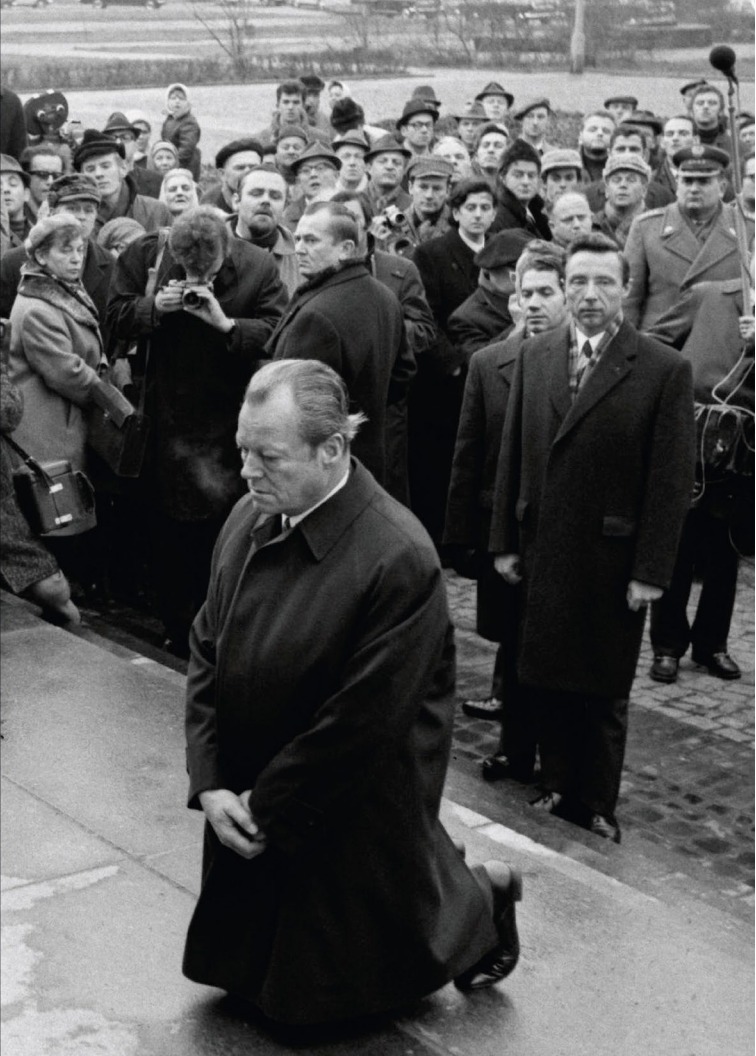
Was wollte Willy Brandt mit seinem Kniefall 1970 im ehemaligen jüdischen Ghetto in Warschau ausdrücken?
What did Willy Brandt want to express with his kneeling gesture in 1970 at the former Jewish ghetto in Warsaw?
- A. He said a prayer at the grave of the unknown soldier
- B. He showed his humility before the Warsaw Pact
- C. He submitted to the former Allies
- D. He asked Poland and the Polish Jews for forgiveness
Eine Frau in Deutschland verliert ihre Arbeit. Was darf nicht der Grund für diese Entlassung sein?
A woman in Germany loses her job. What is not allowed to be the reason for this dismissal?
- A. The woman often came late to work.
- B. The woman is having a baby and her boss knows it.
- C. The woman has been sick and unable to work for a long time.
- D. The woman does private things during working hours.
Vor wie vielen Jahren gab es erstmals eine jüdische Gemeinde auf dem Gebiet des heutigen Deutschlands?
How many years ago did a Jewish community first exist on the territory of present-day Germany?
- A. about 300 years ago
- B. about 700 years ago
- C. about 1150 years ago
- D. about 1700 years ago
Wann war in der Bundesrepublik Deutschland das "Wirtschaftswunder"?
When was the "economic miracle" in the Federal Republic of Germany?
- A. 1980s
- B. 1970s
- C. 1950s
- D. 1940s
Welches Land ist ein Nachbarland von Deutschland?
Which country is a neighboring country of Germany?
- A. Norway
- B. Luxembourg
- C. Spain
- D. Bulgaria
Woran erinnern die sogenannten „Stolpersteine“ in Deutschland?
What do the so-called "Stolpersteine" (stumbling stones) in Germany commemorate?
- A. famous German politicians
- B. traffic accident victims
- C. well-known Jewish musicians
- D. the victims of National Socialism
Wenn man in Deutschland ein Kind schlägt, …
If someone hits a child in Germany, …
- A. that only concerns the family
- B. that concerns no one
- C. one can be punished for it
- D. one cannot be punished for it
Wofür stand der Ausdruck "Eiserner Vorhang"? Für die Abschottung..
What did the term "Iron Curtain" stand for? The sealing off of …
- A. of Nazi Germany against the Allies
- B. of Europe against the USA
- C. of northern Germany against southern Germany
- D. of the Warsaw Pact against the West
Naturalization also requires B1 German. Our free B1 course gets you there.