Illustration of the A1 German word “die Frage”, which translates to “question”. A giant glowing question mark growing out of a flowerpot like a tree, its curling tip dotted with a bright golden light bulb.

Frage is part of German nouns A1–B1 and Goethe A1 vocabulary.

dieFrage, -n

question

/ˈfʁaːɡə/

Examples — Frage in a sentence

Ich habe eine Frage.

I have a question.

Die Lehrerin beantwortet die Frage.

The teacher answers the question.

How to remember it

FRAGE sounds like 'FROG-A'. Imagine a curious FROG-A asking you a big QUESTION.

Word family

fragen family · 10 related words

More A1 words

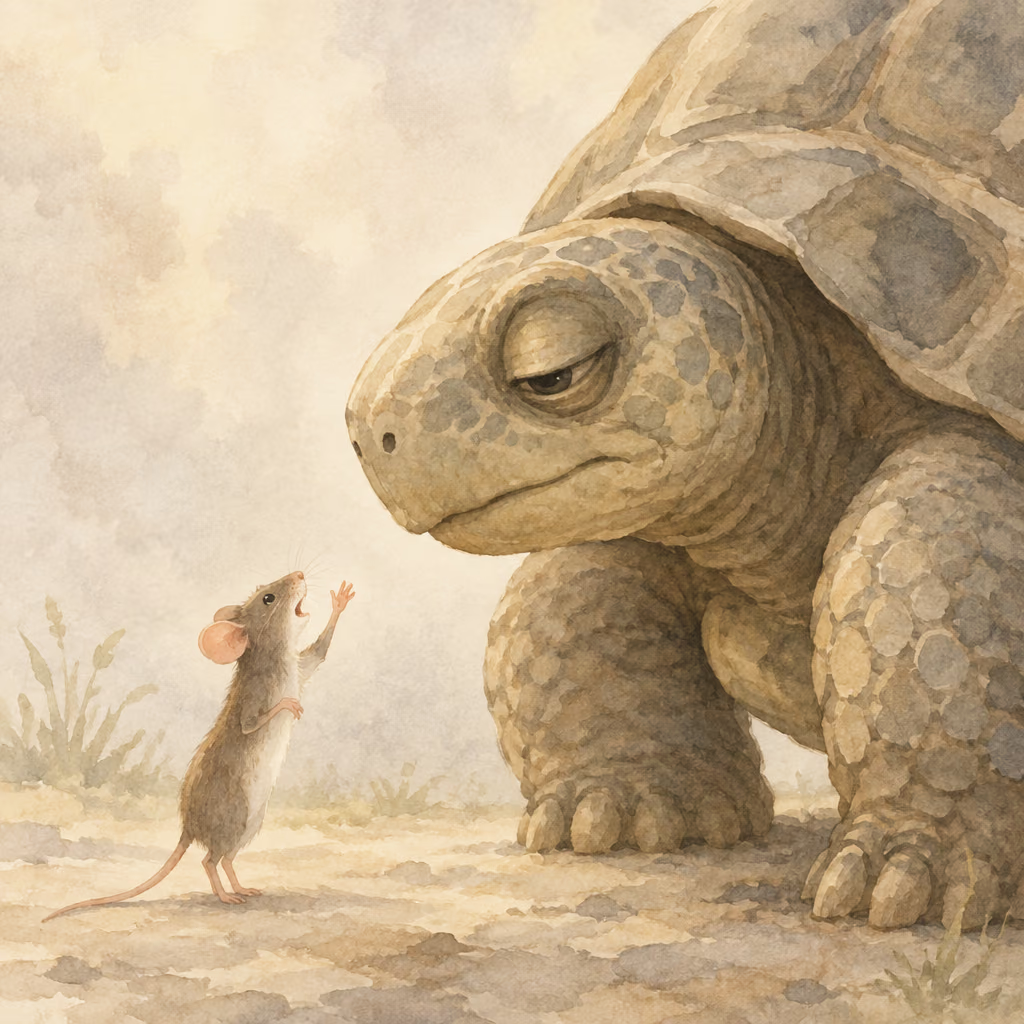
Illustration of the A1 German word “fragen”, which translates to “to ask”. A small mouse on tiptoe, one paw raised high and mouth open mid-question, leans eagerly up at a vast tortoise whose heavy eyelids droop with weary patience.
fragen

/ˈfʁaːɡn̩/

Tap to see details

to ask

Principal parts

fragen, fragte, hat gefragt

ich frage
du fragst
er/sie/es fragt
wir fragen
ihr fragt
sie/Sie fragen

Examples

Ich frage den Lehrer.

I ask the teacher.

Sie fragen nach dem Weg.

They ask for the way.

Illustration of the A1 German word “der Freitag”, which translates to “Friday”. A joyful golden songbird bursts free from a hanging cage woven of grey weekday clouds and soars into a wide open sky shimmering with the promise of rest.
der Freitag

/ˈfʁaɪ̯ˌtaːk/

Friday

Examples

Freitag ist der letzte Arbeitstag.

Friday is the last working day.

Am Freitag gehen wir ins Kino.

On Friday we go to the cinema.

Illustration of the A1 German word “glauben”, which translates to “to believe”. A child floating with heart glowing with belief
glauben

/ˈɡlaʊ̯bn̩/

to believe

Principal parts

glauben, glaubte, hat geglaubt

ich glaube
du glaubst
er/sie/es glaubt
wir glauben
ihr glaubt
sie/Sie glauben

Examples

Ich glaube, du schaffst das.

I believe you can do it.

Wir glauben, es ist wahr.

We believe it is true.

Illustration of the A1 German word “Guten Tag!”, which translates to “Good day!”. A dapper mole in a tiny tuxedo pops out of his dirt hole, tipping his top hat with a dazzling, wide-toothed grin as he bows deeply to a confused, sun-dappled daisy.
Guten Tag!

/ˌɡuːtn̩ ˈtaːk/

Good day!

Examples

Guten Tag! Wie geht es Ihnen?

Good day! How are you?

Der Mann sagt: Guten Tag!

The man says: Good day!

Illustration of the A1 German word “Hallo!”, which translates to “Hello!”. A cheerful round hedgehog throws one paw up in a big friendly wave, beaming wide, little sparkle-lines of greeting radiating around its raised paw in warm welcoming light.
Hallo!

/ˈhalo/

Hello!

Examples

Hallo! Wie geht's dir?

Hello! How are you?

Hallo Anna, schön dich zu sehen!

Hello Anna, nice to see you!

Illustration of the A1 German word “das Heft”, which translates to “notebook, exercise book”. An open notebook floating in mid-air, tiny glowing inkdrops leaping from a nearby bottle and settling across its blank pages like soft blue fireflies.
das Heft

/hɛft/

notebook, exercise book

Examples

Schreibe es in dein Heft.

Write it in your notebook.

Ich brauche ein neues Heft.

I need a new notebook.

1 / 6

fragen — to ask

fragenFreitagglaubenGuten Tag!Hallo!HeftAll German word pages

Start learning German.
For real this time.

Personalized study plan, exercises, and the full 8-unit A1 course. A1 free forever — plus 14 days of full access, no card needed.

Start A1 free