Illustration of the A1 German word “der Donnerstag”, which translates to “Thursday”. A giant, friendly wooden hammer tapping a cloud, causing musical lightning notes to shower down like confetti.

Donnerstag is part of German nouns A1–B1 and Goethe A1 vocabulary.

derDonnerstag, -e

Thursday

/ˈdɔnɐsˌtaːk/

Examples — Donnerstag in a sentence

Donnerstag ist unser Sporttag.

Thursday is our sports day.

Wir haben am Donnerstag eine Besprechung.

We have a meeting on Thursday.

How to remember it

DONNERSTAG sounds like 'DONNER-stahg'. Think 'THUNDER-day' ('Donner' is thunder) – Thursday is the thunder day!

More A1 words

Illustration of the A1 German word “die Familie”, which translates to “family”. Seven raccoons of every size are crammed onto one small sofa, tails tangled, the smallest squeezed out at the end and clinging on by its claws, all delighted.
die Familie

/faˈmiːli̯ə/

Tap to see details

family

Examples

Meine Familie ist klein.

My family is small.

Wir essen mit der Familie.

We eat with the family.

Illustration of the A1 German word “feminin”, which translates to “feminine”. A graceful dancer performing a fluid, elegant routine in a soft, flowing gown.
feminin

/ˌfemiˈniːn/

feminine

Comparative Forms

Positive feminin
Komparativ femininer
Superlativ am femininsten

Examples

Sie hat einen femininen Stil.

She has a feminine style.

Dieses Kleid ist sehr feminin.

This dress is very feminine.

Illustration of the A1 German word “die Frage”, which translates to “question”. A giant glowing question mark growing out of a flowerpot like a tree, its curling tip dotted with a bright golden light bulb.
die Frage

/ˈfʁaːɡə/

question

Examples

Ich habe eine Frage.

I have a question.

Die Lehrerin beantwortet die Frage.

The teacher answers the question.

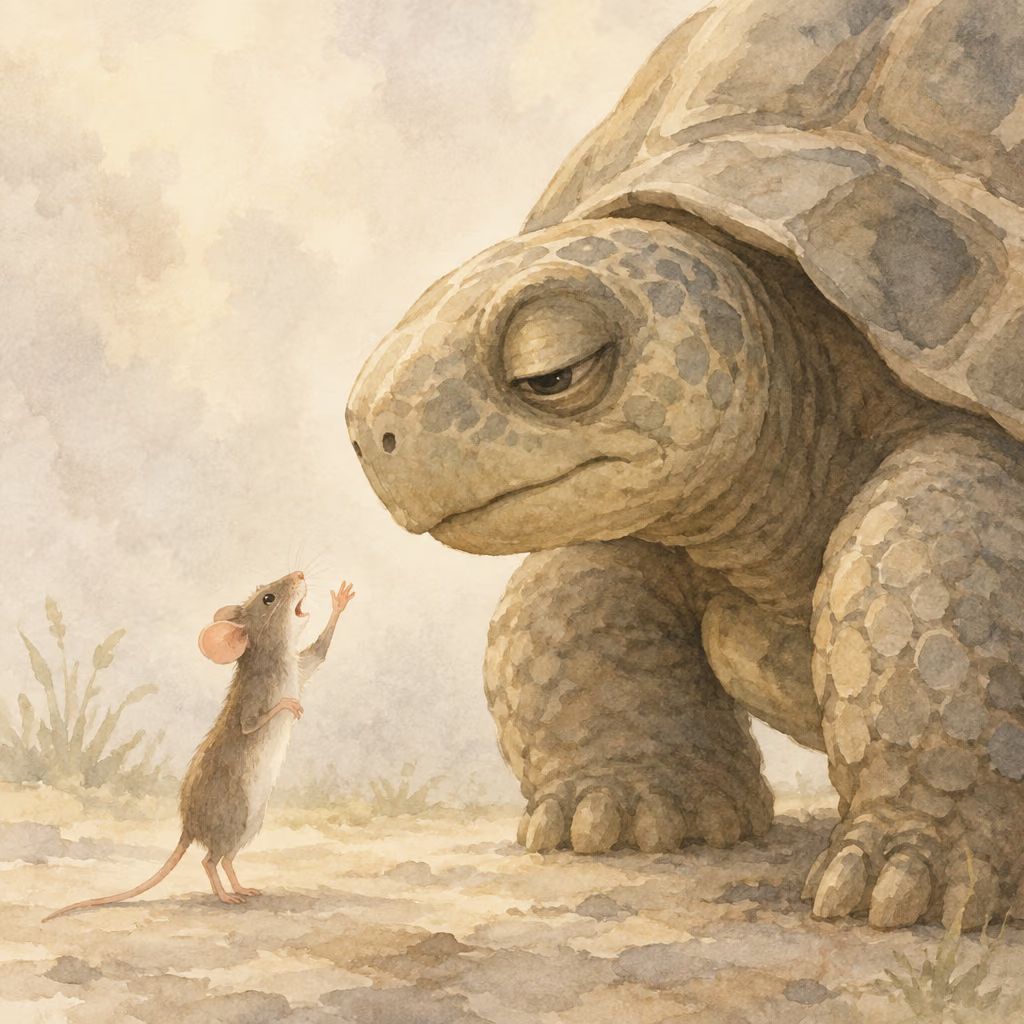
Illustration of the A1 German word “fragen”, which translates to “to ask”. A small mouse on tiptoe, one paw raised high and mouth open mid-question, leans eagerly up at a vast tortoise whose heavy eyelids droop with weary patience.
fragen

/ˈfʁaːɡn̩/

to ask

Principal parts

fragen, fragte, hat gefragt

ich frage
du fragst
er/sie/es fragt
wir fragen
ihr fragt
sie/Sie fragen

Examples

Ich frage den Lehrer.

I ask the teacher.

Sie fragen nach dem Weg.

They ask for the way.

Illustration of the A1 German word “der Freitag”, which translates to “Friday”. A joyful golden songbird bursts free from a hanging cage woven of grey weekday clouds and soars into a wide open sky shimmering with the promise of rest.
der Freitag

/ˈfʁaɪ̯ˌtaːk/

Friday

Examples

Freitag ist der letzte Arbeitstag.

Friday is the last working day.

Am Freitag gehen wir ins Kino.

On Friday we go to the cinema.

Illustration of the A1 German word “glauben”, which translates to “to believe”. A child floating with heart glowing with belief
glauben

/ˈɡlaʊ̯bn̩/

to believe

Principal parts

glauben, glaubte, hat geglaubt

ich glaube
du glaubst
er/sie/es glaubt
wir glauben
ihr glaubt
sie/Sie glauben

Examples

Ich glaube, du schaffst das.

I believe you can do it.

Wir glauben, es ist wahr.

We believe it is true.

1 / 6

feminine Familie — family

FamiliefemininFragefragenFreitagglaubenAll German word pages

Start learning German.
For real this time.

Personalized study plan, exercises, and the full 8-unit A1 course. A1 free forever — plus 14 days of full access, no card needed.

Start A1 free