
How to remember der, die, das
Learn each noun in its gender colour inside a short, vivid scene — blue for der, pink for die, green for das — and the article stops being a guess. Word endings fill in the rest.
The colour + scene method
German gives every noun a gender: der (masculine), die (feminine), or das (neuter). There are patterns, but no rule catches them all, so most learners try to memorise a plain list — and that breaks down after a few hundred words.
The method here is different. Instead of memorising a label, you encode the gender into a picture. Give each gender a colour and picture the word inside a small scene tinted that colour:
- der Hund — the dog in a blue-lit scene (masculine)
- die Katze — the cat in a pink room (feminine)
- das Haus — the house with green accents (neuter)
Now the article isn't a separate fact to recall. It's part of the image. When the scene comes back, the colour comes with it — and so does the gender.
Let the endings do some of the work
Some German word endings point almost always to one gender. Learn these and you can guess the article for thousands of nouns you've never seen:
| Gender | Common endings | Examples |
|---|---|---|
| die (feminine) | -ung, -heit, -keit, -schaft, -ion, -tät, -ei | die Zeitung, die Freiheit, die Nation |
| das (neuter) | -chen, -lein, -ment, -um | das Mädchen, das Dokument, das Datum |
| der (masculine) | -er, -ling, -ismus, -ant | der Lehrer, der Frühling, der Tourismus |
These are strong signals, not iron laws — a few exceptions exist — but they cover most everyday words. For the full case tables and every definite and indefinite form, read the deeper der/die/das grammar guide.
How One Who Learns applies it
Every word in the course arrives as a card built around this method. Each card encodes three things at once:
- The meaning — an image showing what the word represents
- The gender — colour-coded: blue for der, pink for die, green for das
- A hook — a detail in the scene that links the German sound to the meaning
This is the memory palace method applied to gender. You don't build the scenes yourself — each card is one ready-made room you can revisit. See it in action across the A1 vocabulary list or browse every word already built as a card, and read how these flashcards compare to Anki and Quizlet.
The same nouns, as cards
Every noun in the course arrives as a picture tinted with its gender colour. Six from the A1 list:
der

der Hund
dog
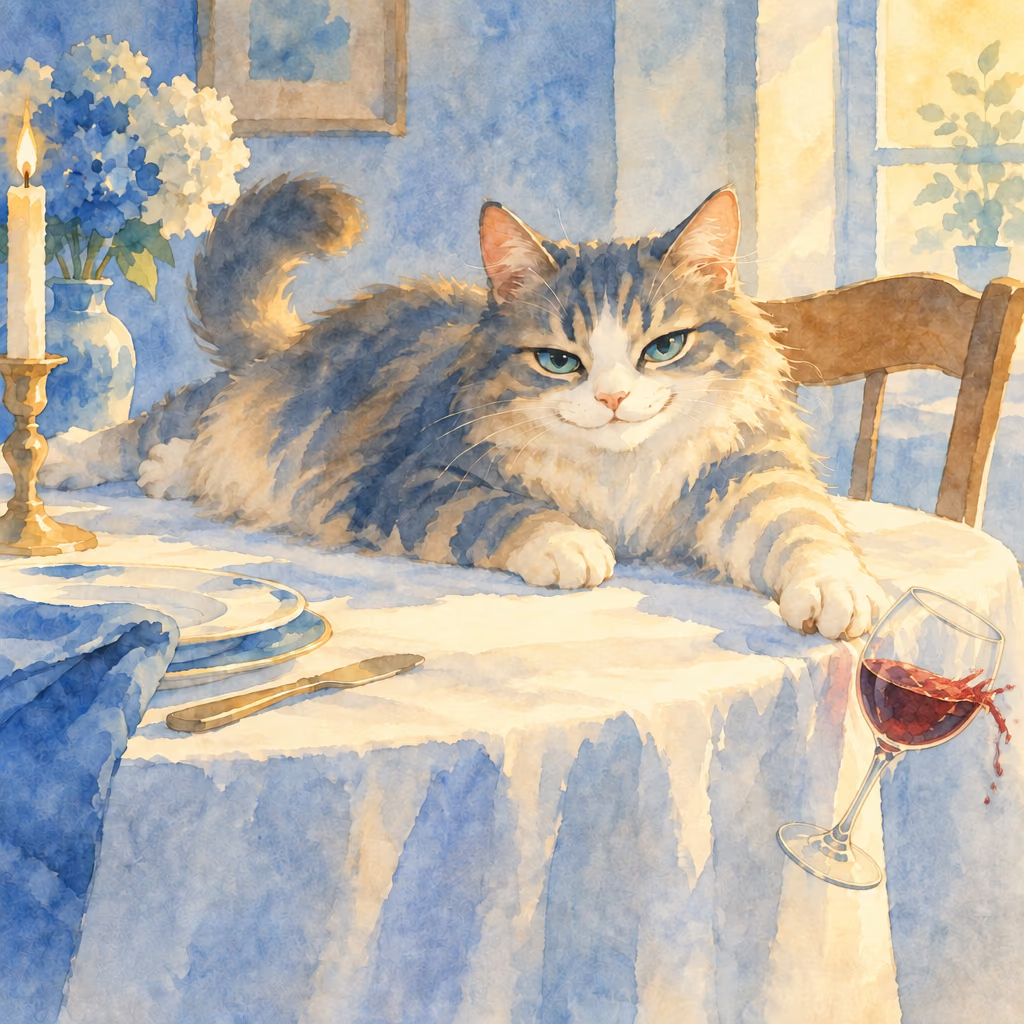
der Tisch
table
die

die Katze
cat
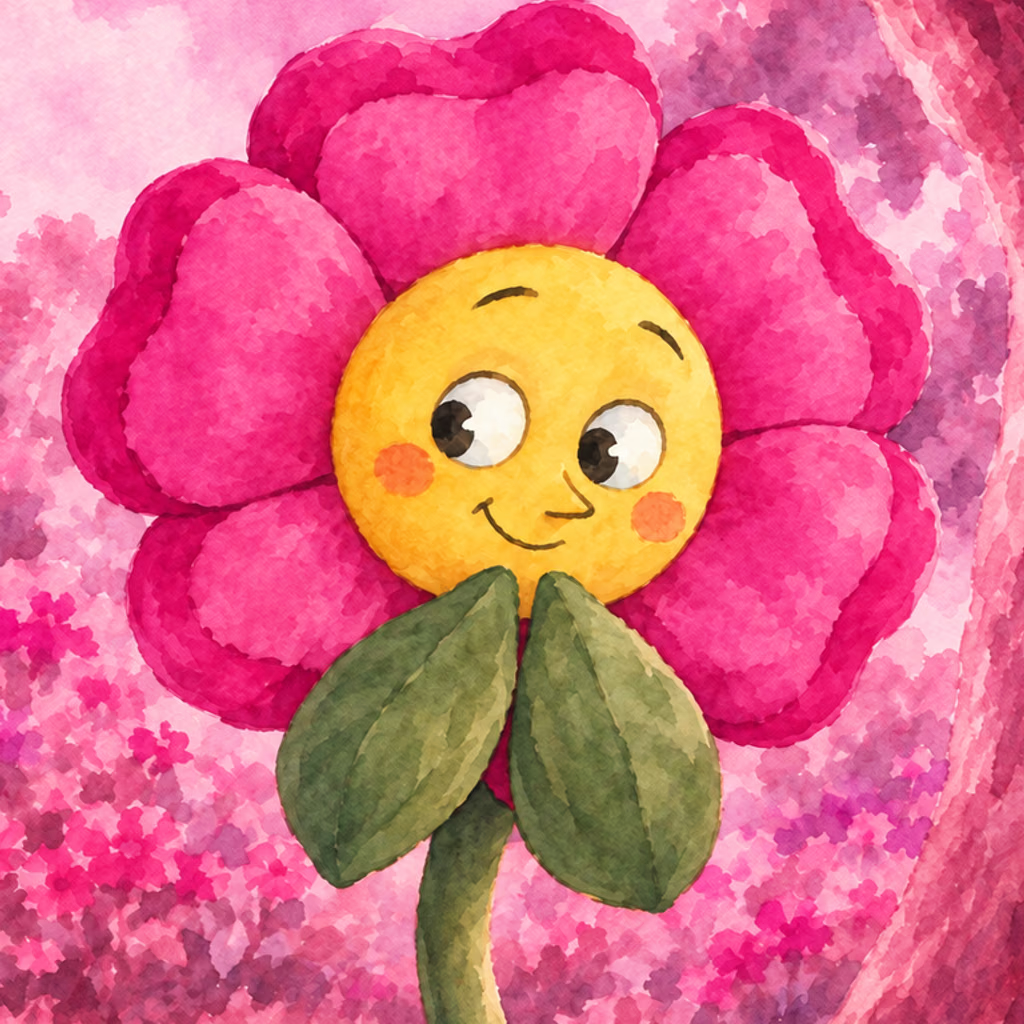
die Blume
flower
das

das Haus
house

das Buch
book
Browse the full set in the A1 vocabulary list.
Guess the article
Pick der, die, or das for real German nouns. Instant feedback, no signup.
Alltag
choose the right article
Where to go next
The colour + scene method makes gender stick. To put it to work:
- Start the free A1 German course — every noun comes gender-coloured
- Drill articles anytime with the standalone der/die/das trainer
- Look up any word in the German nouns list — every noun with its article and its plural
- Read the full grammar guide for the case tables behind the articles