
Einbürgerungstest Practice
German citizenship test practice — 460 questions, free, no signup required.
Progress is session-only — sign up free to save it.
Warum kontrolliert der Staat in Deutschland das Schulwesen?
Why does the state in Germany oversee the school system?
- A. because there are different schools in the federal states
- B. because there are only state schools in Germany
- C. because it is its task according to the Basic Law
- D. because all pupils must obtain a school-leaving qualification
Zu welchem Fest tragen Menschen in Deutschland bunte Kostüme und Masken?
For which festival do people in Germany wear colorful costumes and masks?
- A. at Pentecost
- B. at Oktoberfest
- C. on Rose Monday
- D. on May Day
Was ist Deutschland nicht?
What is Germany not?
- A. a monarchy
- B. a welfare state
- C. a democracy
- D. a state governed by the rule of law
Welche Farben hat die deutsche Flagge?
What colors does the German flag have?
- A. red-white-black
- B. black-red-green
- C. black-red-gold
- D. black-yellow-red
Die Bundesrepublik Deutschland hat einen dreistufigen Verwaltungsaufbau. Wie heißt die unterste politische Stufe?
The Federal Republic of Germany has a three-tier administrative structure. What is the lowest political tier called?
- A. district offices
- B. municipalities
- C. city councils
- D. county administrators
Was bedeutet "aktives Wahlrecht" in Deutschland?
What does "active right to vote" mean in Germany?
- A. One must attend the vote count.
- B. One is allowed to vote.
- C. One can be elected.
- D. One must go and vote.
Womit finanziert der deutsche Staat die Sozialversicherung?
How does the German state finance social insurance?
- A. donations
- B. social security contributions
- C. church taxes
- D. association membership fees
Was ist in Deutschland ein Brauch zu Weihnachten?
What is a custom in Germany at Christmas?
- A. dressing up with masks and costumes
- B. hiding colorful eggs
- C. putting pumpkins outside the door
- D. decorating a Christmas tree
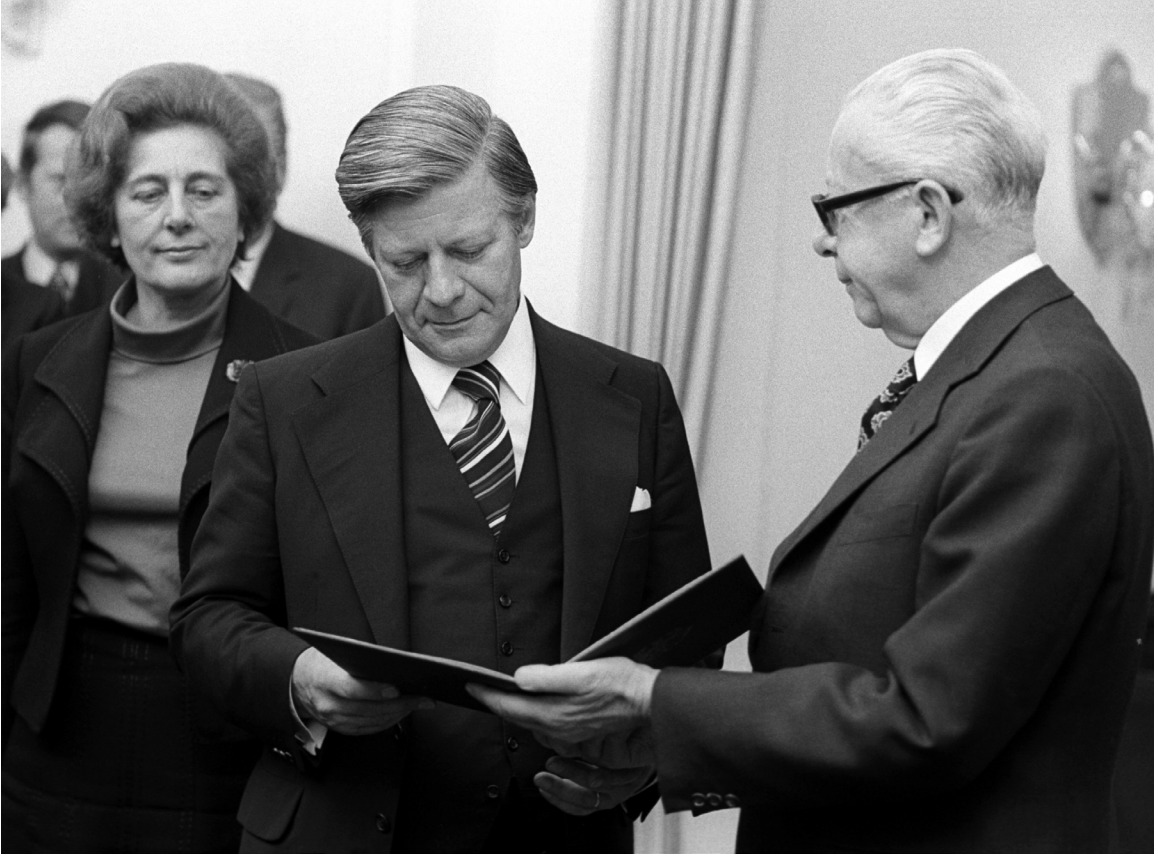
Der deutsche Bundespräsident Gustav Heinemann gibt Helmut Schmidt 1974 die Ernennungsurkunde zum deutschen Bundeskanzler. Was gehört zu den Aufgaben der deutschen Bundespräsidentin/des deutschen Bundespräsidenten?
German Federal President Gustav Heinemann presents Helmut Schmidt with the certificate of appointment as German Federal Chancellor in 1974. What is one of the tasks of the German Federal President?
- A. He/she controls the governing party.
- B. He/she proposes the chancellor candidate for election.
- C. He/she conducts government business.
- D. He/she selects the ministers.
Wer wird als "Kanzler der Deutschen Einheit" bezeichnet?
Who is referred to as the "Chancellor of German Unity"?
- A. Helmut Schmidt
- B. Konrad Adenauer
- C. Gerhard Schröder
- D. Helmut Kohl
Welche Maßnahme schafft in Deutschland soziale Sicherheit?
Which measure creates social security in Germany?
- A. health insurance
- B. liability insurance
- C. building insurance
- D. car insurance
Wenn Sie bei einer Bundestagswahl in Deutschland wählen dürfen, heißt das …
If you are allowed to vote in a Bundestag election in Germany, this is called …
- A. active right to vote.
- B. active election campaign.
- C. active campaigning.
- D. active electoral procedure.
Was ist in Deutschland ein Brauch zu Ostern?
What is a custom in Germany at Easter?
- A. shooting fireworks into the air
- B. decorating a Christmas tree
- C. putting pumpkins outside the door
- D. painting eggs
Wo hält sich der deutsche Bundeskanzler/die deutsche Bundeskanzlerin am häufigsten auf? Am häufigsten ist er/sie …
Where does the German Federal Chancellor spend most of his/her time? He/she is most often …
- A. at Meseberg Palace, the federal government's guest house, to receive state guests.
- B. in Berlin, because the Federal Chancellery and the Bundestag are located there.
- C. at Bellevue Palace, the official residence of the Federal President, to receive state guests.
- D. in Bonn, because the Federal Chancellery and the Bundestag are located there.
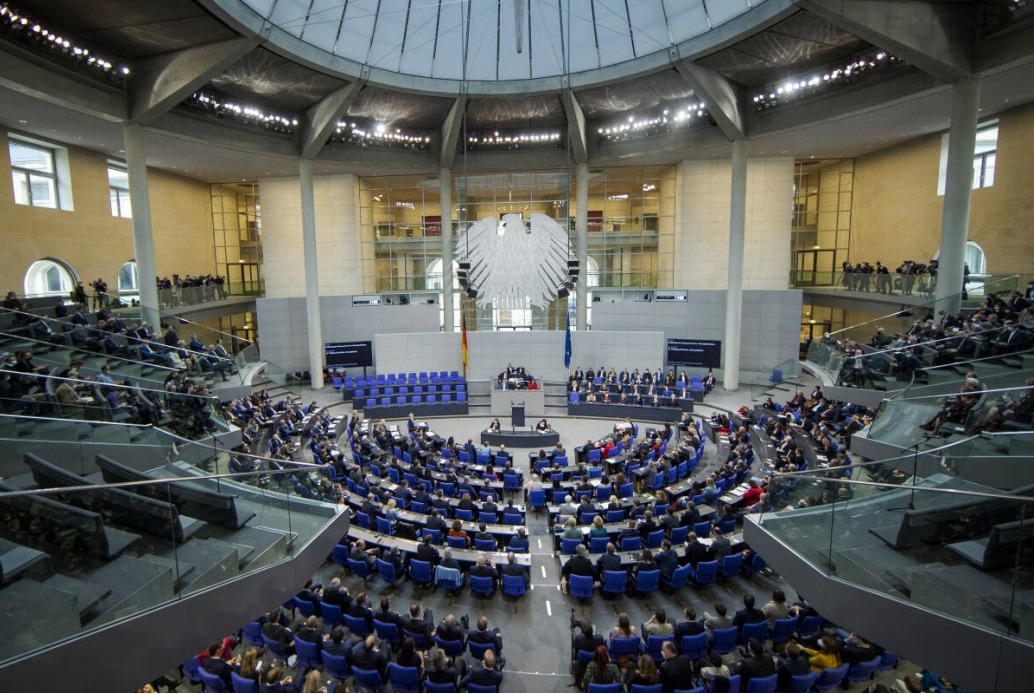
Welches Symbol ist im Plenarsaal des Deutschen Bundestages zu sehen?
Which symbol can be seen in the plenary chamber of the German Bundestag?
- A. the imperial eagle
- B. the imperial crown
- C. the federal eagle
- D. the flag of the city of Berlin
Die Bundesrepublik Deutschland ist ein demokratischer und sozialer ...
The Federal Republic of Germany is a democratic and social …
- A. centralized state.
- B. confederation of states.
- C. federal state.
- D. confederation.
Pfingsten ist ein …
Pentecost is a …
- A. international day of mourning.
- B. Christian holiday.
- C. Bavarian custom.
- D. German day of remembrance.
Wie viel Prozent der Zweitstimmen müssen Parteien mindestens bekommen, um in den Deutschen Bundestag gewählt zu werden?
What is the minimum percentage of second votes that parties must receive to be elected to the German Bundestag?
- A. 3%
- B. 4%
- C. 5%
- D. 6%
In welchem Zeitraum gab es die Deutsche Demokratische Republik (DDR)?
During which period did the German Democratic Republic (GDR) exist?
- A. 1949 to 1990
- B. 1945 to 1961
- C. 1933 to 1945
- D. 1919 to 1927
Wie heißt die jetzige Bundeskanzlerin/der jetzige Bundeskanzler von Deutschland?
What is the name of the current Federal Chancellor of Germany?
- A. Gerhard Schröder
- B. Angela Merkel
- C. Friedrich Merz
- D. Ursula von der Leyen
Naturalization also requires B1 German. Our free B1 course gets you there.